
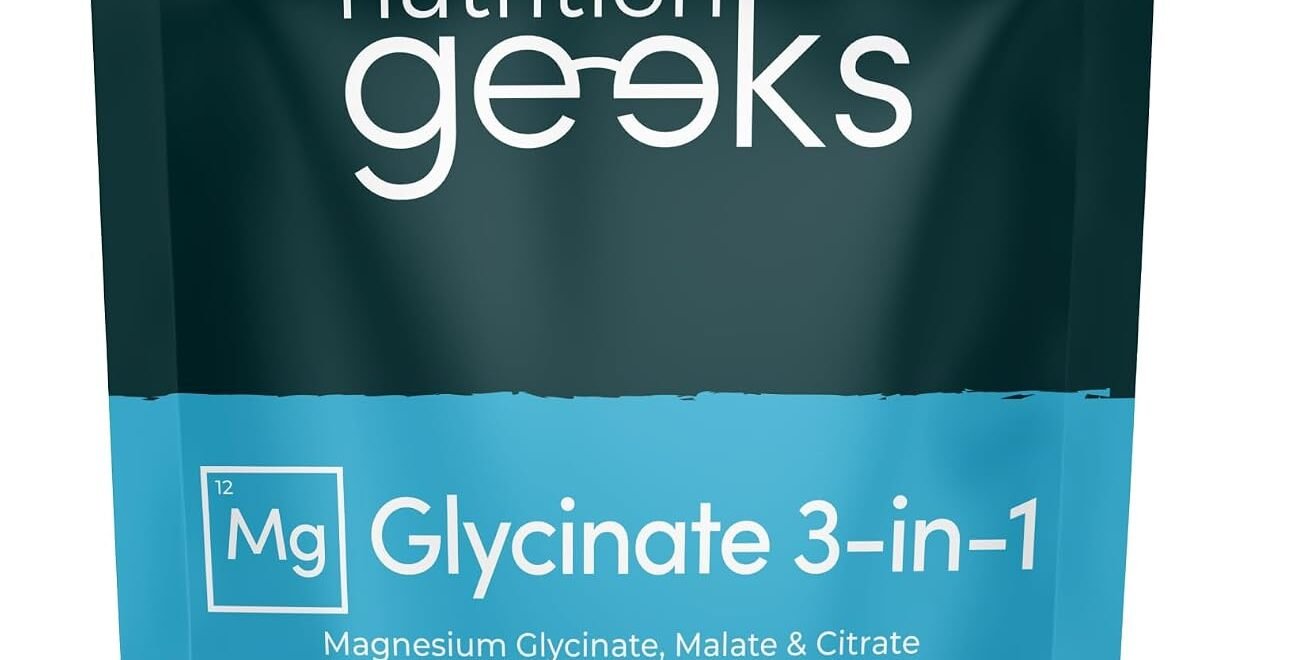
One of the UK’s best-selling magnesium supplements, at a price almost nothing else matches — 36,000 buyers rate it 4.5 out of 5, and the label deserves it. The one thing to know before buying is that the number on the front of the listing is not the number that matters.
The label
The listing says 1800 mg. The panel says 384 mg. Both are true.

Most of the category does this, which is why a “1800 mg” pack and a “375 mg” pack often contain the same amount of magnesium. One three-star reviewer did the arithmetic himself and called the description misleading while still saying the product worked. Both halves are fair.
Is 384 mg right for you?
It is legal and safe in Britain, but close to the ceiling. The NHS advises that 400 mg or less a day from supplements is unlikely to cause harm; the UK Expert Group on Vitamins and Minerals sets the same figure as a safe upper level for supplements specifically.
Not a safety scandal — a stacking problem. One reviewer titled his review, in as many words, a warning not to stack supplements.
The pack is marked 45–90 days, so one capsule a day is an intended option. One capsule gives 192 mg: clear of the ceiling, ample alongside food (UK reference intakes are 300 mg for men, 270 mg for women), and 11p a day. Two capsules make sense only if you have reason to think your intake is genuinely low.
Does “3-in-1” help?
Partly, and with a trade-off the marketing skips.
Bisglycinate is magnesium bound to glycine — the form associated with calm and sleep, and the gentlest on the gut. Citrate is only partly absorbed and draws water into the intestine, which is why it is used for constipation and why it loosens stools at higher doses; adding 400 mg of it gives back some of the tolerability glycinate was chosen for. Malate is marketed for energy on thin human evidence.
As for “triple high absorption”: head-to-head data between these forms is limited, and nothing shows three forms absorb better than one at the same elemental dose.
Magnesium and sleep: what the research shows
A real effect, modest in size, on weak evidence.
The most relevant recent trial used this exact form: 250 mg of elemental magnesium as bisglycinate for four weeks cut Insomnia Severity Index scores by 3.9 points against 2.3 on placebo — significant, but a small effect, with most of the change in the first fortnight.
Two implications. The benefit sits in falling asleep, not staying asleep — so for 3 a.m. waking this is a weak fit. And give it two weeks before judging.
What buyers report
Verdict
- Works
- 11–22p a day undercuts most of the category
- Bisglycinate is the right lead form
- Full amounts disclosed, no proprietary blend
- Elemental figure printed on the panel
- UK made, vegan, letter-box friendly
- Doesn’t
- “1800 mg” is compound weight, not magnesium
- Two capsules use 96% of the UK ceiling
- No third-party testing published
- Citrate works against glycinate’s gentleness
- “Triple high absorption” unsupported
- Large capsules — the most common complaint
Worth it if you want a cheap, well-labelled daily magnesium for sleep onset or evening calm, and you start at one capsule.
Skip it if you already take a multivitamin, electrolyte mix or sleep formula with magnesium in it; if large capsules are a problem; if you want citrate-free glycinate for a sensitive gut; or if your issue is waking at 3 a.m. rather than getting to sleep.
Check with a pharmacist if you have reduced kidney function or take bisphosphonates, levothyroxine, or tetracycline or quinolone antibiotics.
How we score
Every supplement in this section is judged on the same six criteria, weighted as below. We score the product that left the factory — the formula, the dose, the pack — not the way a retailer has written the listing. Marketing wording is worth pointing out, and we do, but it does not move the score.
Each criterion is scored out of 10 against the norm for its category, not against an ideal: 10 is best practice, 8 solid with minor gaps, 6 works but with a real limitation, 4 a serious shortfall, 2 should not be on the shelf. The overall figure is the weighted average, printed to one decimal place, and the paragraph under the table explains where the marks went.
How we review: every supplement is scored on the same six criteria — formulation 25%, dosing against the evidence 25%, real-world record 20%, value 15%, practicality 10%, transparency 5%. The real-world score reflects the product’s customer rating and, just as importantly, how many ratings stand behind it: tens of thousands of buyers tell you something a desk review cannot, while a few hundred tell you very little. We buy nothing from the brands we cover and take no payment for placement. General information, not medical advice.