The evidence against ultra-processed food has strengthened considerably. Here is what it shows, what mechanisms are being studied, and what the practical implications are.
Most nutritional villains arrive on a wave of observational data and leave quietly a decade later. Ultra-processed food is a partial exception: alongside the usual epidemiology, there is one tightly controlled human trial whose result is difficult to explain away. That trial is the reason this topic deserves more attention than the last several dietary scares — and the category it tests is also, awkwardly, one of the least precise in nutrition science.
What “ultra-processed” actually means
The term comes from the NOVA system, which sorts food by degree of processing rather than nutrient content. The fourth group — ultra-processed — covers industrial formulations typically containing ingredients you would not find in a domestic kitchen: emulsifiers, modified starches, protein isolates, colourings, flavourings, and non-nutritive sweeteners.

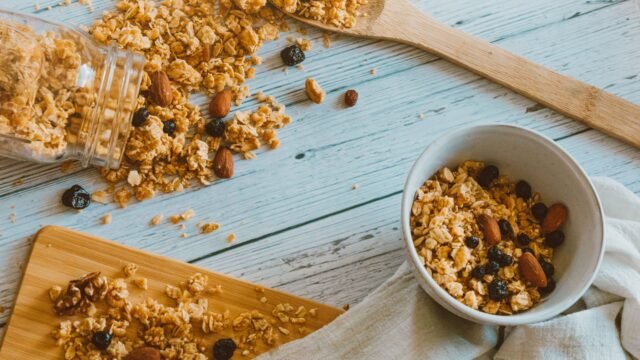
The definition’s breadth is its main weakness. Group four contains soft drinks, packaged snacks, and confectionery. It also contains most supermarket wholemeal bread, baked beans, many breakfast cereals, and some plain yoghurts. Treating those as a single exposure category is scientifically awkward, and it is the most substantive criticism the field faces.
The trial that made this causal
In 2019, researchers admitted twenty adults to a metabolic ward for four weeks. Each spent two weeks eating an ultra-processed diet and two weeks eating a minimally processed one, in randomised order, with both diets matched for presented calories, macronutrients, sugar, sodium and fibre. Participants could eat as much or as little as they wanted.
On the ultra-processed diet they ate around 500 calories a day more and gained roughly a kilogram. On the minimally processed diet they lost about the same. The diets were nutritionally matched; the difference was how the food was made.
That design removes most of the usual objections. Nobody was choosing their own food, the nutrients were controlled, and the comparison was within the same people. It is a small study in an artificial setting, and it remains the strongest causal evidence in this area by a considerable distance.
Matched for calories, sugar, fat, salt and fibre, people still ate 500 calories a day more. Something about the processing itself was driving it.
— WellnessLife editorial
What the observational evidence adds
A 2024 umbrella review published in the BMJ pooled 45 meta-analyses covering roughly 14 million people. It graded the evidence as convincing for associations between higher ultra-processed food intake and cardiovascular mortality, type 2 diabetes, and common mental disorders, with suggestive evidence across a range of other outcomes.
The standard caveats apply and matter here more than usual. Ultra-processed food intake tracks closely with income, education, working hours, and smoking, so residual confounding is a serious concern rather than a formality. Dietary recall is imprecise. And because the category is broad, a single association may be driven by one component — sugary drinks, say — rather than by processing as a general property.
The mechanisms under study
If processing itself causes overeating, something has to explain how. Several candidates are being investigated, and more than one is probably operating.
Eating rate and texture. Ultra-processed foods are typically soft, energy-dense, and require little chewing. People eat them measurably faster, and faster eating gives satiety signalling less time to catch up before the meal ends. This is currently the leading explanation for the trial result.
The food matrix. Processing disrupts the physical structure that slows digestion in whole foods. The same nutrients, differently arranged, produce different glycaemic and satiety responses — which is why an apple and apple juice behave differently despite similar composition.
Additives. Certain emulsifiers have been shown to alter gut microbiota and intestinal barrier function in animal studies, with early human work pointing in a similar direction. This is a plausible but immature line of evidence, and it is often reported with more certainty than it has earned.
Displacement. The dullest explanation and possibly a large part of it: diets high in ultra-processed food are usually low in vegetables, legumes, fruit and fibre. Some of the harm may be about what is absent rather than what is present.
- A randomised inpatient trial found people ate around 500 calories a day more on a nutrient-matched ultra-processed diet
- That trial involved 20 participants over two weeks per arm — small, tightly controlled, and the strongest causal evidence available
- An umbrella review of 45 meta-analyses graded evidence as convincing for cardiovascular mortality, type 2 diabetes, and common mental disorders
- Observational intake tracks strongly with income, education and smoking, so residual confounding remains a live concern
- Faster eating rate and reduced oral processing time are the leading proposed mechanisms
- Emulsifier effects on the gut are plausible but rest largely on animal data
- The NOVA category spans soft drinks and wholemeal bread, which weakens it as a single causal exposure
Where the category breaks down
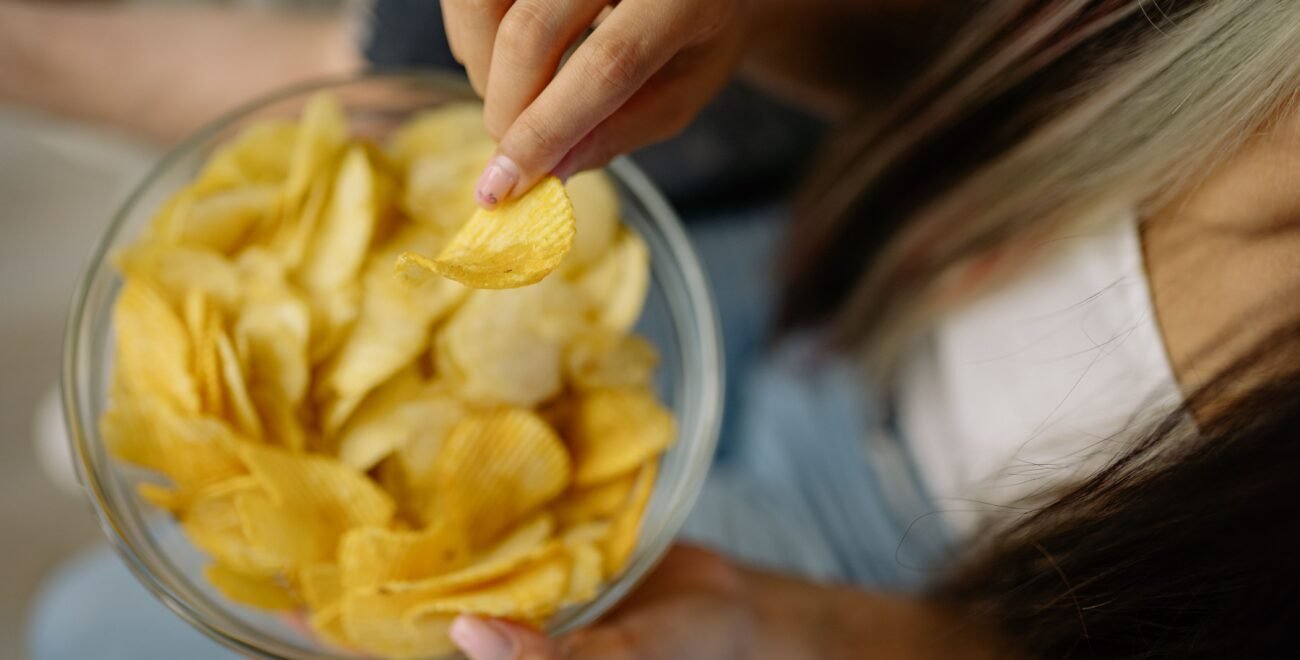
Some analyses that separate subgroups find the associations are concentrated in particular items — sugary drinks, processed meats, packaged snacks and confectionery — while others, including wholegrain breads and some cereals, show little or no association with harm.
This matters practically, because advice to avoid all ultra-processed food is both unachievable for most households and probably targets more than it needs to. Tinned beans, frozen vegetables, plain yoghurt with added cultures, and wholemeal bread are not the problem the research is describing, even when a classification system files them alongside it.
The practical implications
The realistic version of this advice acknowledges that ultra-processed food is cheap, requires no time, keeps for weeks, and does not demand cooking skills or equipment. Those are not failings of willpower; they are the reasons the category exists. Advice that ignores them is advice for people with time and money.
What the evidence supports, roughly in order of confidence: reduce sugar-sweetened drinks first, since they carry the clearest independent evidence of harm. Reduce processed meat, which has its own separate cancer evidence. Then look at packaged snacks and confectionery, which are the foods most engineered for the eating-rate effect. Leave the tinned pulses, the frozen vegetables, and the wholemeal loaf alone.
One more thing worth saying. This research describes population patterns, not a moral hierarchy of foods, and there is a version of “clean eating” built on it that does more harm than the crisps. If reading about ultra-processed food is producing anxiety about ordinary meals rather than a few substitutions, the anxiety is the more pressing problem.
The practical takeaway
The evidence has genuinely strengthened, and the inpatient trial is the reason. Something about how ultra-processed foods are constructed appears to drive people to eat more of them than they intend, independent of their nutrient content — which is a different and more interesting claim than “junk food is bad for you.”
Act on it where the evidence is clearest and the change is cheapest: drinks first, then snacks, then processed meat. And judge the result by how much you are eating and how satisfied you feel, not by how many items in your cupboard would survive a classification audit.
Sources
- Hall KD, Ayuketah A, Brychta R, et al. “Ultra-processed diets cause excess calorie intake and weight gain: an inpatient randomized controlled trial of ad libitum food intake.” Cell Metabolism, 2019.
- Lane MM, Gamage E, Du S, et al. “Ultra-processed food exposure and adverse health outcomes: umbrella review of epidemiological meta-analyses.” BMJ, 2024.
- Monteiro CA, Cannon G, Levy RB, et al. “Ultra-processed foods: what they are and how to identify them.” Public Health Nutrition, 2019.
- Srour B, Fezeu LK, Kesse-Guyot E, et al. “Ultra-processed food intake and risk of cardiovascular disease: prospective cohort study (NutriNet-Santé).” BMJ, 2019.
- Chassaing B, Koren O, Goodrich JK, et al. “Dietary emulsifiers impact the mouse gut microbiota promoting colitis and metabolic syndrome.” Nature, 2015.