The ‘wash less’ advice is everywhere. Here is what the science says about scalp sebum, hair health, and why the answer is genuinely different for different hair types.
“Wash your hair less and it’ll produce less oil” has become one of those pieces of advice repeated so often it feels like established fact. The mechanism behind it turns out to be mostly wrong — but the underlying advice to wash less frequently is still often correct, just for a completely different reason than the one usually given.
The “hair training” myth, and why it’s a myth
Here’s the important correction: sebum production is driven by hormones and genetics, and dermatological research finds the rate of sebum secretion for a given individual is relatively constant and isn’t significantly changed by how often you shampoo. Washing removes the oil that’s already accumulated on the scalp and hair — it doesn’t send a signal back to the sebaceous glands telling them to produce more or less. A useful way to picture it: shampooing is emptying a sink, not adjusting how fast the tap drips. Emptying the sink more or less often doesn’t change the tap’s flow rate.

This directly contradicts the popular “hair training” claim that washing less will gradually make your scalp produce less oil over time. Trichologists and dermatologists are somewhat divided on whether external stimuli can meaningfully influence sebaceous gland responsiveness at the margins, but the mainstream evidence points toward sebum output being set primarily by hormones (including cortisol, which means chronic stress genuinely can increase oiliness) and genetics — not by your wash schedule. If you’ve stuck out a greasy adjustment period expecting your scalp to eventually “learn” to produce less oil, the research suggests that improvement, if it happens, isn’t coming from the mechanism most people believe.
So why does washing frequency matter at all?
Because even though washing doesn’t change production, it absolutely changes how much accumulated oil, sweat, dead skin cells, and product buildup sits on your scalp at any given time — and that accumulation is where both the benefits and the downsides of washing frequency actually come from. A large study of over 1,500 participants examining shampoo frequency found that washing more often reduced flaking, itch, odor, and markers of oxidative stress on the scalp, without damaging hair integrity — a real, measurable benefit to more frequent washing for people whose scalp and hair type suit it. On the other side, overwashing can strip the scalp’s protective lipid layer, leading to dryness and irritation, particularly for hair types where oil doesn’t redistribute easily.
Why the right answer genuinely differs by hair type
This is the mechanical detail that explains most of the disagreement in casual “how often should you wash” conversations, and it comes down to hair geometry, not oil production. Sebum travels from the scalp down the hair shaft by wicking along the strand. Straight hair wicks oil efficiently and evenly, meaning sebum reaches the ends and also builds up at the roots relatively quickly — which is why straight, fine, or naturally oily hair types generally look and feel greasy sooner and benefit from more frequent washing, commonly daily to every-other-day. Curly, coily, or tightly kinked hair wicks sebum far more slowly and unevenly along the twists and bends of the strand, meaning oil tends to stay concentrated near the roots rather than distributing down the length — which is both why these hair types can typically go longer between washes without the same “greasy roots” problem, and why the ends of curly and coily hair are often drier regardless of wash frequency, since oil rarely makes it that far.
Reasonable general starting points dermatologists commonly cite: fine or straight hair with an oily scalp, daily to every other day; wavy or medium texture, two to three times a week; curly, coily, or thick hair, roughly once a week to once every two weeks. These are starting points to adjust from, not rules — climate, activity level, styling product use, and individual scalp condition all shift where someone lands within (or outside) these ranges.
The honest caveat about “washing less” advice generally
Because it’s a genuinely common source of confusion: dermatologists are clear that hair itself is not living tissue and doesn’t produce oil or need washing for its own sake — it’s the scalp, living skin, that needs regular cleansing to prevent the buildup that leads to flaking, odor, itchiness, or in some cases folliculitis. This is why “wash less” as a blanket instruction can go wrong: for hair types and scalp conditions where oil and buildup accumulate quickly, going too long between washes doesn’t train anything, it just allows buildup to sit on living skin longer than is comfortable or healthy for that particular scalp.
The practical takeaway
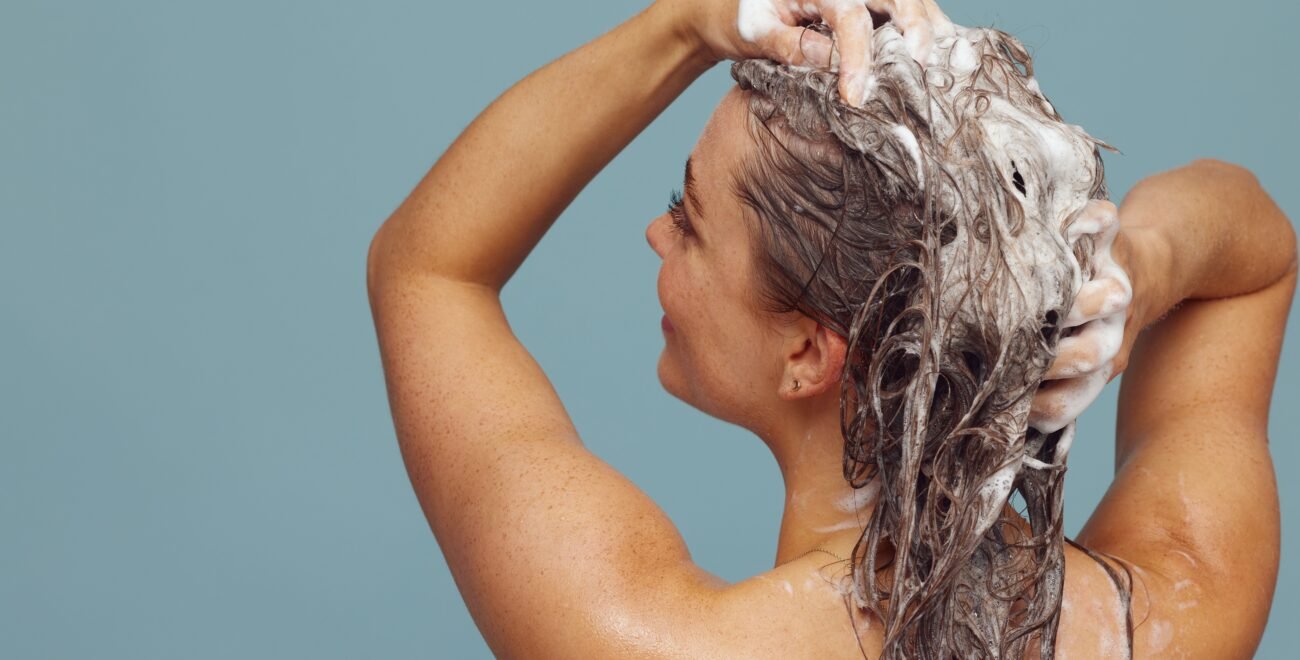
Wash frequency is a legitimate, hair-type-specific decision, not a moral one, and the “less is always better” framing oversimplifies real biology in the same way “wash every day” once did. What actually helps: apply shampoo to the scalp first, where the buildup actually lives, rather than focusing on the hair shaft, and use conditioner primarily on the lengths and ends where oil rarely reaches naturally. If oiliness feels disproportionate to a reasonable wash schedule for your hair type, that’s more likely a hormonal or stress-related signal worth mentioning to a dermatologist than a sign you haven’t held out long enough for “training” to kick in — because, per the current evidence, it won’t.
Sources
- Dermatology Times. “Considerations for hair washing frequency,” clinical dermatology perspective on sebum wicking by hair geometry.
- Large-cohort study (University of Miami/University of Minnesota collaboration) on shampoo wash frequency and scalp flaking, itch, odor, and oxidative stress markers.
- Research on sebum secretion rate stability and lack of modification by shampoo frequency, dermatology journal literature.
- American Academy of Dermatology guidance on hair-type-specific washing frequency recommendations.