
Hypertension guidelines were updated significantly in recent years. Here is what the new targets are, what affects blood pressure, and what actually lowers it.
If you were told your blood pressure was fine a decade ago, it is worth checking again against current numbers — the definition of “fine” has genuinely moved, and it moved because of a specific trial that changed how cardiologists think about risk at levels previously considered unremarkable.
What actually changed, and why
For years, 140/90 mmHg was the standard threshold for a hypertension diagnosis, with 120–139/80–89 sitting in a “prehypertension” category treated as a yellow flag rather than something requiring action. In 2017, the American College of Cardiology and American Heart Association overhauled this framework. The prehypertension category was eliminated entirely, and the threshold for stage 1 hypertension was lowered to 130/80 mmHg — meaning millions of people previously told their blood pressure was borderline-acceptable were reclassified as hypertensive under the new definition. Current guidance, reaffirmed in a 2025 update, keeps that same threshold in place.

The change was not cosmetic. It was driven substantially by the SPRINT trial, a large randomized controlled trial that tested whether treating blood pressure more aggressively — targeting a systolic reading below 120 rather than the older, looser target of 140 — actually improved outcomes. It did, meaningfully. That is a large enough effect to justify redefining what counts as a medical problem, even though it meant nearly doubling the share of American adults classified as hypertensive: from roughly 30% to about 49% under the new threshold in one analysis.
- Normal: below 120/80 mmHg
- Elevated: systolic 120–129 with diastolic still below 80 — a category meant to flag risk before it becomes a diagnosis, prompting lifestyle attention rather than medication
- Stage 1 hypertension: systolic 130–139 or diastolic 80–89
- Stage 2 hypertension: systolic 140 or higher, or diastolic 90 or higher
- The old framework: 140/90 for diagnosis, with everything from 120/80 upward labelled “prehypertension” — a category that no longer exists
An important, often-missed detail about stage 1: the guidelines do not automatically call for medication at this level. Roughly 69% of people with stage 1 hypertension do not qualify for immediate drug therapy under current guidance — the recommended first step is a genuine trial of lifestyle intervention, typically for three to six months, with medication considered only if blood pressure does not improve or if someone’s broader cardiovascular risk is already high.
What actually moves the number — with real specifics, not vague advice
The lifestyle recommendations in current guidelines are not generic “eat better, move more” advice. They come with specific, evidence-based targets.
- Sodium reduction is one of the most consistently supported interventions. Guidelines recommend limiting sodium to under 2,300 mg daily, with an optimal target closer to 1,500 mg — or, more realistically for most people used to a typical Western diet, at minimum cutting current intake by around 1,000 mg. This single change has one of the better-established evidence bases of any dietary blood pressure intervention.
- The DASH diet has a genuinely strong track record specifically for blood pressure, not just general healthy eating — built around fruits, vegetables, whole grains, low-fat dairy, and reduced saturated fat, alongside increased potassium intake (roughly 3,500–5,000 mg daily from food), which works partly by helping the body manage sodium’s effect on blood pressure.
- Exercise recommendations are specific enough to actually follow: 90 to 150 minutes per week of aerobic or dynamic resistance activity, or isometric resistance training three sessions a week — a smaller and more precise ask than the vague “exercise more” framing usually implies.
- Weight loss, even modest, matters disproportionately. Guidance points to a healthy body weight where relevant, but notes that even a modest loss is associated with measurable blood pressure benefit. The relationship is not all-or-nothing.
- Alcohol moderation has its own specific ceiling: no more than two drinks daily for men, one for women — a lower bar than general alcohol guidance sometimes implies, specifically because of alcohol’s direct effect on blood pressure.
- Stress management has a real, if smaller, evidence base. Chronic stress is an independent risk factor for hypertension via sustained cortisol and sympathetic nervous system activation, and structured interventions — including guided breathing and mindfulness-based programmes tested in randomized trials — have shown measurable systolic reductions in stage 1 hypertensive adults, making this a legitimate part of a treatment plan rather than a soft add-on.
The definition of “fine” moved because the trial evidence moved first — not because the rules were arbitrarily tightened.
— WellnessLife editorial
A measurement detail worth knowing
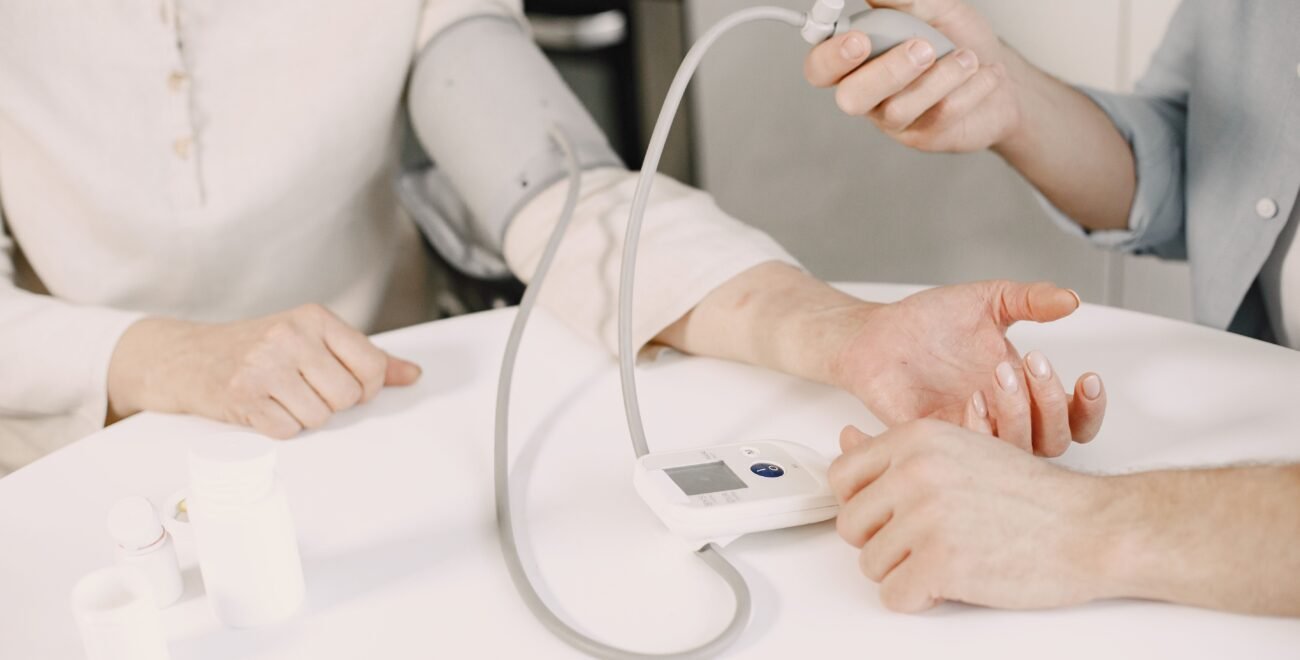
Something rarely mentioned outside the clinical literature: the SPRINT trial’s blood pressure readings, which underpin much of the current guidance, were taken using a strict, standardized protocol — an automated device, three readings one minute apart, with the patient alone and resting, and no clinician present in the room at many sites. Real-world office readings, taken quickly with a clinician present, often run higher than that protocol would produce, due to the well-documented phenomenon sometimes called “white coat” elevation. This is part of why home blood pressure monitoring, done consistently and correctly, is increasingly emphasized as a more accurate picture of someone’s actual baseline than a single reading taken during a rushed appointment.
The practical takeaway
The guideline change was not an arbitrary tightening of the rules — it reflected trial evidence that lower blood pressure targets produce better outcomes, even for people who would have been told a decade ago that their numbers were fine. If your last check-up used the older framework, it is worth getting re-evaluated against the current 130/80 threshold rather than assuming an old “normal” verdict still applies. And if you land in the stage 1 range, the guideline-backed first move is genuinely trying the specific lifestyle changes above for several months, in consultation with your doctor — not immediately reaching for medication, and not ignoring the reading either.
Sources
- SPRINT Research Group. “A randomized trial of intensive versus standard blood-pressure control.” New England Journal of Medicine, 2015.
- 2017 ACC/AHA Hypertension Guideline; 2025 AHA/ACC update maintaining the 130/80 mmHg threshold.
- Real-world outcomes analysis of the 2017 ACC/AHA guideline threshold and cardiovascular events. Scientific Reports, 2018.
- DASH diet and sodium and potassium intake research underlying current lifestyle guideline recommendations.
- Randomized controlled trial of a breathing meditation intervention on systolic blood pressure in stage 1 hypertensive adults.