
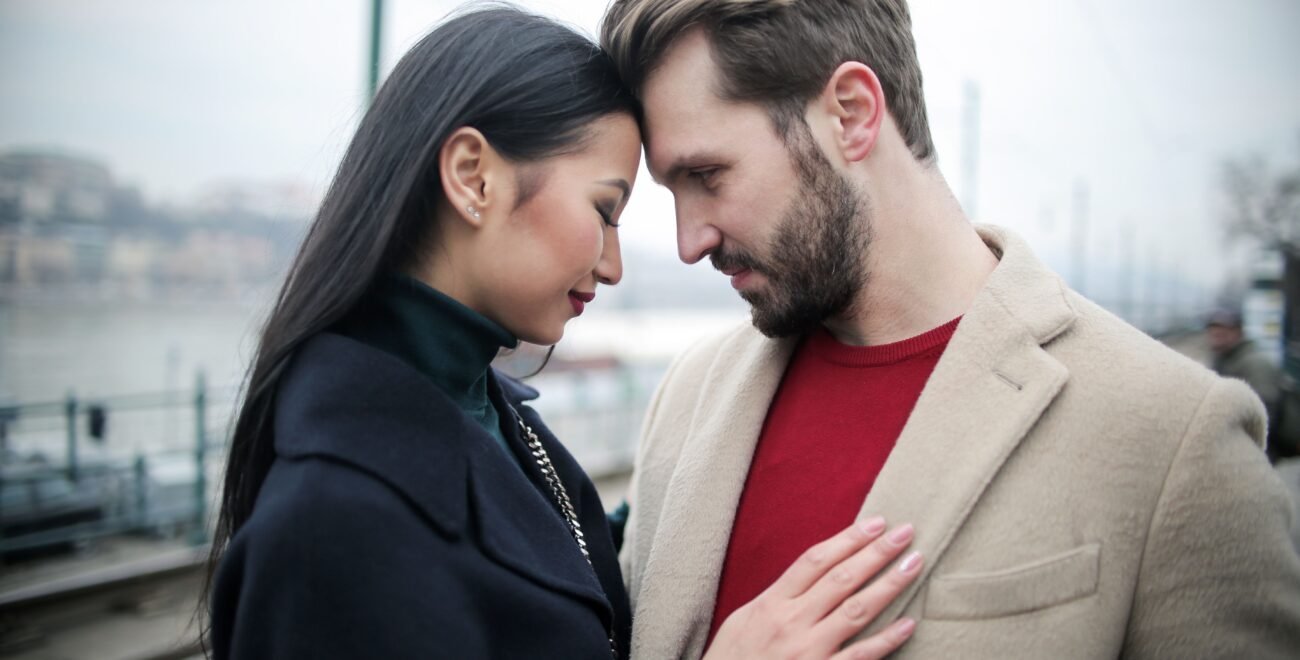
Physical attraction is real and measurable. But the factors that sustain attraction over time are largely different from those that initiate it.
Physical appearance gets an outsized share of the credit for attraction, partly because it is the fastest signal available and partly because it is the easiest thing to market products around. The research tells a more interesting story: what draws people together and what keeps them together are driven by almost entirely different mechanisms — and most of them have nothing to do with how someone looks.
What starts it: proximity and repetition
One of the most consistently replicated findings in social psychology is the mere-exposure effect: simply encountering someone repeatedly, all else being equal, increases how much you like them. This is not a fringe theory — it has been demonstrated across faces, sounds, and objects since some of the earliest research on the phenomenon in the late 1800s, and it is one reason the “where did you two meet” question so often has a mundane, proximity-driven answer rather than a cinematic one.
There is an important limit worth knowing, though. Proximity and repeated exposure amplify whatever impression is already forming — they do not manufacture attraction out of nothing, and they can just as easily deepen dislike if the early impression is negative. Researchers examining the popular version of this idea have pushed back on the stronger claim that proximity alone can trigger attraction. The honest read is that proximity is close to necessary for most attraction to develop, but rarely sufficient by itself.
Why “opposites attract” mostly does not hold up
Despite how often it gets repeated, the evidence for complementary personalities driving attraction is thin. What the data consistently supports is the opposite: similarity — in attitudes, values, and interests specifically — is one of the more reliable predictors of who becomes attracted to whom.
A classic study that randomly assigned male university students to be roommates found that similarity in attitudes and values predicted friendship formation better than most other factors tracked. The effect is notably stronger for values and attitudes than for personality traits themselves: you do not need an identical personality to someone, but sharing their sense of what matters does real, measurable work.
The mechanism that keeps it going: perceived responsiveness
This is where the research diverges most sharply between what starts attraction and what sustains it. One of the more robust findings in relationship science is the power of perceived responsiveness — the sense that another person genuinely understands, values, and attends to you, demonstrated through how they listen and react rather than through anything about how they look.
That is arguably the single biggest reframe on offer here. Charm and lasting attraction turn out to be driven far more by how someone makes you feel understood in the moment than by any static trait either person walked in with.
Reciprocity plays a related role from the very beginning: people tend to like those who signal that they like them back, sometimes even overriding the effect of similarity. This creates a circular but genuinely important dynamic — believing someone is interested in you measurably increases your interest in them, independent of anything else about them.
Charm turns out to be less about what you are than about how understood the other person feels while talking to you.
— WellnessLife editorial
What the “36 Questions” study actually demonstrated
Arthur Aron’s well-known experiment paired strangers and had them work through a series of increasingly personal questions, escalating in vulnerability, followed by a period of sustained eye contact. Participants reported significant increases in felt closeness and attraction afterwards — not because of any trick, but because the structure deliberately manufactured mutual, escalating self-disclosure, which is one of the more consistently identified drivers of closeness in relationship research more broadly.
It is frequently misrepresented as a formula for falling in love. What it actually demonstrates is that vulnerability, reciprocated and built gradually, accelerates a bonding process that would otherwise take much longer to unfold.
Where physical appearance actually fits in
None of this erases appearance from the picture. Physical attractiveness genuinely does shape first impressions, and cross-cultural research finds notable agreement on certain attractiveness cues. There is also a well-documented attractiveness stereotype, in which physically attractive people are unconsciously assumed to be happier, more competent, or more successful than they may be — a bias that shapes far more than dating.
But the research is fairly consistent that appearance’s influence is heavily front-loaded. It does more work in a first encounter than in what follows, where similarity, responsiveness, and reciprocated vulnerability increasingly take over as the drivers of whether attraction deepens or fades.
- Repeated exposure reliably increases liking — but it amplifies an existing impression rather than creating one, and can deepen dislike
- Similarity in attitudes and values predicts attraction more reliably than complementary personalities do
- The similarity effect is stronger for values than for personality traits themselves
- Perceived responsiveness — feeling understood and attended to — is among the most robust predictors of sustained attraction
- Reciprocity is powerful enough that believing someone likes you increases your liking for them independently
- The 36 Questions procedure works through structured mutual self-disclosure, not through any property of the questions
- Physical attractiveness shapes first impressions strongly and subsequent development comparatively little
The practical takeaway
If physical appearance were the whole story, none of the rest of this would be nearly as well documented. What the research supports is a sequence: proximity and repeated contact create the opportunity, similarity and reciprocal signals of interest get things started, and it is perceived responsiveness — feeling genuinely seen — plus gradually shared vulnerability that determines whether early attraction becomes something lasting.
The version of “chemistry” most people describe after the fact usually turns out, on closer inspection, to have been built from exactly these unglamorous, well-studied ingredients.
Sources
- Reis HT, Maniaci MR, Caprariello PA. “Familiarity does indeed promote attraction in live interaction.” Journal of Personality and Social Psychology, 2011.
- Aron A, Melinat E, Aron EN, Vallone RD, Bator RJ. “The experimental generation of interpersonal closeness: a procedure and some preliminary findings.” Personality and Social Psychology Bulletin, 1997.
- Newcomb TM. Randomised roommate-assignment research on similarity and interpersonal attraction, University of Michigan.
- Reis HT, et al. Research on perceived partner responsiveness in relationship science.
- Stalder DR. Critical commentary on proximity and mere-exposure claims in popular accounts of attraction.