
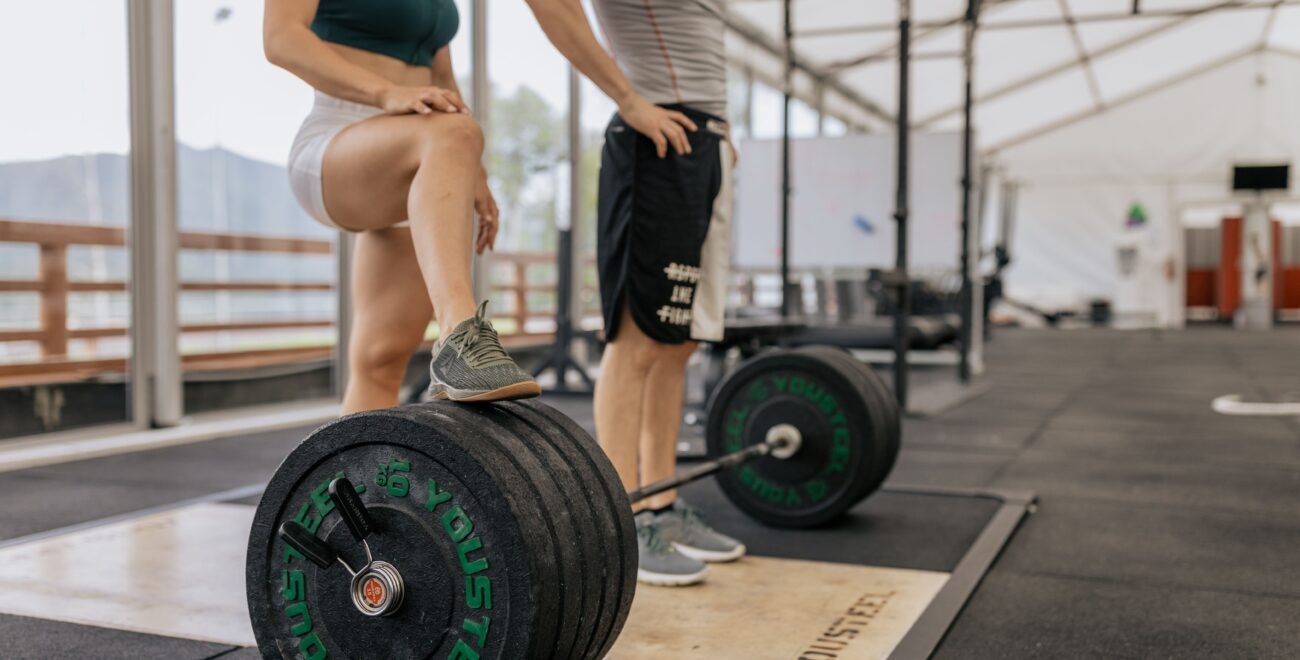
Muscle mass, bone density, metabolism, insulin sensitivity — strength training after 40 affects all of them. A practical guide to starting or restarting.
Somewhere around 30, muscle loss quietly begins — and by 40, it’s no longer quiet enough to ignore. The good news is that this particular decline is one of the more reversible things about ageing, and the evidence for that is unusually solid.
What’s actually happening to your body
Without resistance training, the average adult loses roughly 3–8% of muscle mass per decade starting around age 30, with the pace picking up noticeably after 60. That number alone undersells it, though — strength declines faster than muscle mass does. Longitudinal research puts the loss of muscle strength at two to five times the rate of muscle size, meaning you can lose functional capacity — the ability to carry groceries, get up off the floor, climb stairs without strain — well before it shows up as visible muscle loss. Some research even suggests muscle can look normal on a scan while losing much of its force-producing capacity as fat and connective tissue creep into the tissue.

This process, sarcopenia, isn’t a fixed sentence. It’s what happens by default in the absence of a specific stimulus — and resistance training is that stimulus. Studies consistently show it’s the most effective single intervention for slowing, halting, or partially reversing this decline, at any age it’s started.
Why the effects go beyond muscle
The case for lifting after 40 isn’t just cosmetic or even just about strength:
- Bone density. Mechanical loading from resistance training stimulates bone-building cells directly, and muscle mass itself correlates with bone density — which matters increasingly for fracture risk as people age, particularly for women navigating the bone-density changes that come with menopause.
- Insulin sensitivity. Muscle contraction allows glucose into cells through a pathway that doesn’t require insulin, which is part of why resistance training measurably improves blood sugar regulation and metabolic health independent of weight change.
- Mortality risk. A 2020 meta-analysis found each 5kg increase in grip strength was associated with a 16% reduction in mortality risk — grip strength being used in this kind of research as a proxy for overall muscular health, not because grip itself is the protective factor.
- Falls and independence. Strength training measurably improves balance and coordination, which translates directly into lower fall risk — one of the leading causes of loss of independence in later life.
Women in particular experience accelerated muscle and bone loss during the menopausal transition as oestrogen declines, which is one reason resistance training is increasingly recommended specifically around and after that transition rather than treated as optional.
Why protein matters more here than it did at 25
Older muscle becomes less responsive to protein — a phenomenon researchers call anabolic resistance, meaning it takes more protein per meal to trigger the same amount of muscle repair that a smaller dose would trigger in a younger person. The practical implication from the research is aiming for roughly 30–40g of quality protein per meal, spread across the day, rather than relying on one large dose — this compensates for the reduced per-meal responsiveness and supports the muscle-building signal training provides.
Starting or restarting: the practical version
- Frequency: 2–3 resistance sessions a week is enough to drive real adaptation — this isn’t a daily-gym-visit requirement.
- Focus on compound movements: squats, hinges (deadlift variations), presses, and rows recruit the most muscle mass and carry over most directly into daily function.
- Progressive overload, gradually: the training needs to get incrementally harder over time — more weight, more reps, or better form — but “gradually” matters more here than “aggressively,” especially in the first few months back.
- Don’t skip recovery: older muscle also takes somewhat longer to recover between sessions, so 48 hours between training the same muscle group is a reasonable default rather than daily maximal effort.
- Get technique right before adding load: this is not about being overly cautious — it’s that the return on decent form vastly outweighs the return on heavier weight with poor form, especially when re-establishing movement patterns after time away.
The single most consistent finding across this research isn’t about the specific program — it’s that starting later doesn’t blunt the benefit nearly as much as people assume. Studies in much older populations still show meaningful strength and muscle gains from resistance training; 40 is, if anything, an early and highly responsive point to begin.
Sources
- Mitchell WK, et al. “Sarcopenia, Dynapenia, and the Impact of Advancing Age on Human Skeletal Muscle Size and Strength: A Quantitative Review.” Frontiers in Physiology, 2012.
- Research on resistance training interventions for sarcopenia, Bone Research, 2025.
- Studies on grip strength and all-cause mortality, meta-analysis, 2020.
- Research on anabolic resistance and per-meal protein thresholds in older adults, muscle protein synthesis literature.